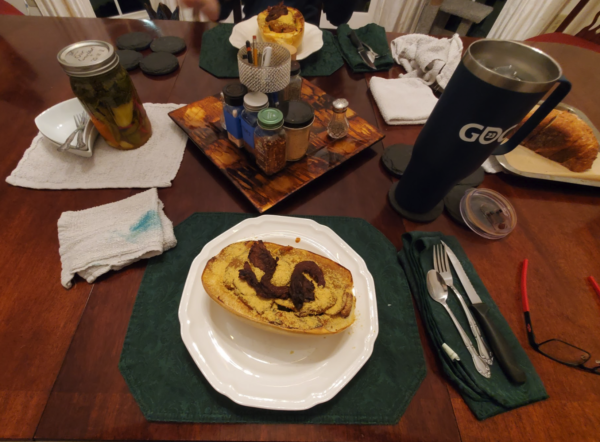
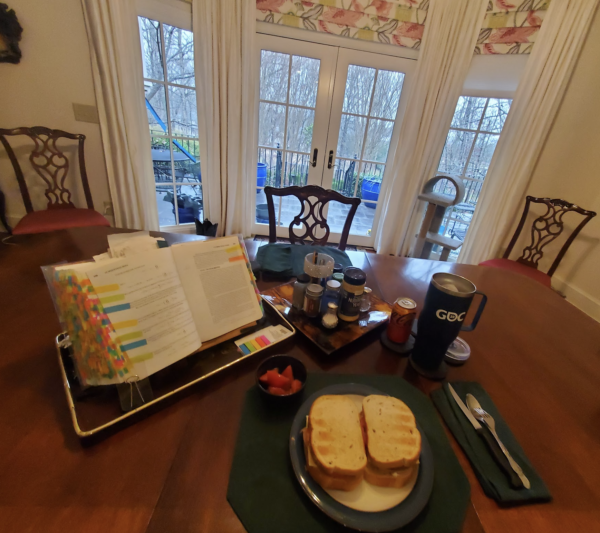
I am unlikely to become a vegan, but I do enjoy vegan food, and one special time for vegans is the winter, in which many wonderful squash are available for vegan dishes. My wife has developed a wonderful "formula" for vegan dinners which involves a squash (today, spaghetti squash), a filling (today I think mujudara, a rice and lentil Lebanese dish she picked up from me and ran with), a topping (mushroom jerky and mushroom marinara sauce) and some kind of bread or pasta (today, vegan sourdough from Whole Foods).
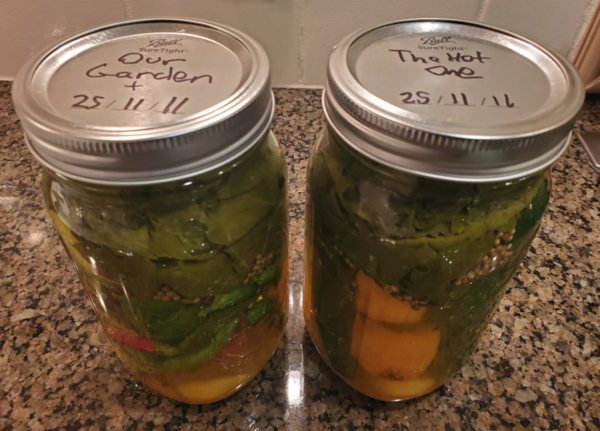
An assist on today's meal are some Lebanese pickled hot peppers that I made which are ... okay. The recipe I used said they'd be ready in about a month, but these are one and a half months old and they're not too pickled so far. Flavor is fine, not too exciting, but the ones my mom and dad made were always a bit more pickled and soft, whereas these are still crunchy. I'd probably research whatever it is that makes them more soft and do more of that, and probably up the amount of spices (turmeric and garlic and more) in the mix.
But! A perfectly good meal.
Today's challenges included blogging (yasss, this post), drawing (1 drawing), writing (~1900 words on Tales of the Spookymurk), working on a scientific paper (on prosocial robotics), and some reading.
Also in today's news, America seems to be grasping at starting a Western Hemisphere empire, and to justify it, Stephen Miller demonstrated his lack of grasp of basic history:
“We live in a world, in the real world, Jake, that is governed by strength, that is governed by force, that is governed by power,” he said. “These are the iron laws of the world since the beginning of time.”
Real cute, Steveo, but ignorant. Since you're interested in the beginning of history - I know you said time, but I'm just going to interpolate what you really meant there, since it isn't coherent enough to be parsed on its own merits - you might look up the chaps Hitler, Napoleon and Alexander. The iron law of the world is that setting the whole world against you never goes well, and even if things seem to be looking up for you for a bit, an empire put together by pure force will fall apart as soon as it slips from a tyrant's dead fingers.
Realpolitik is neither real nor politic - it's a childish emotional response to situations which is directly contradicted by readily available facts. I'm prepared to justify that in depth, but then, the proponents of realpolitik generally don't know what it actually meant and are simply grasping at a word to justify their emotional desire to do something harmful and stupid that feels good to them, rather than, say, looking at what the actual consequences of pulling that bullshit on counter-acting actors generally turns out to be.
-the Centaur
Pictured: dinner with Sandi, and the pickled peppers when I bottled them.
Okay, today's post was going to be a post about friends and family and the value of organizing dinners.
Instead, I'd like to blog that it's late, and I'm tired.
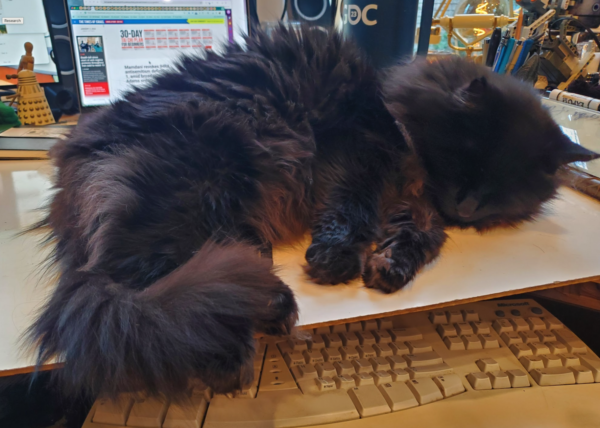
Our five cats have not been getting along of late, and so we've separated the newest addition from the O.G.'s (the Original Girls, who actually aren't the original gangsters at all, but are the new(ish) kittens picking on the new(est) kitten). So, I was up super late socializing them yesterday, and am real damn tired today.
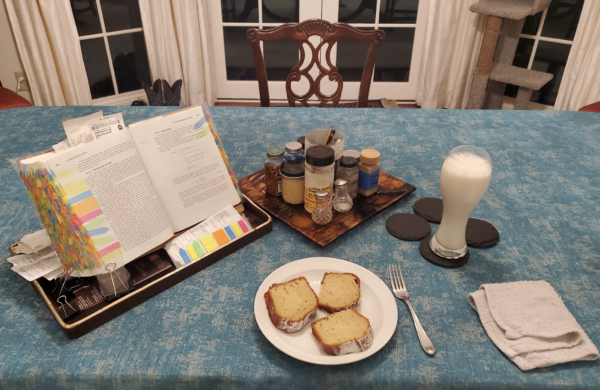
So please enjoy this picture of late-night pound cake and milk. Goodnight.
-the Centaur
Pictured: Pound cake, vanilla almond milk, and Pattern Recognition and Machine Learning, a fantastic, highly mathematical tour of machine, deep and Bayesian learning, my latest evening read.
Now, I couldn't do that when I started Drawing Every Day back in 2021, as I was a roboticist at Google working to bank up savings for me and my wife's retirement. But I could commit to doing at least one practice drawing, as I was already experienced at doing writing challenges like this blog and National Novel Writing Month. My notes say I got at least 215 days in to Drawing Every Day in 2021.
But I seem to have skipped it entirely in 2022, and couldn't pick it up again in 2023 due to the Google layoffs and me scrambling to finish the papers we had in flight and to get contract work. Only in 2024 did I start the project again, this time, getting at least 135 days into it (I say at least, since I may have drawings in a notebook that I did not yet scan for my records).
2025 was the year that I really buckled down and won it. Here are the rules that I followed:
The challenge starts in a calendar year.
The goal is to produce one practice drawing for every day in the year.
You can draw ahead as far as you have to to make sure you don't fall behind.
Ideally, your buffer should be at least a month, a week, and two days.
Drawings should be complex enough to take at least 10 minutes.
Any drawing you finish, in any medium, can count towards Drawing Every Day.
Conversely, don't pick a topic for Drawing Every Day too complex for a full 3 hour practice session.
"Retro" posts for missed days OR YEARS are allowed.
Success is doing a drawing for every day in a year before the year is over.
Completion is doing a drawing for every day in a year, regardless of when it is drawn.
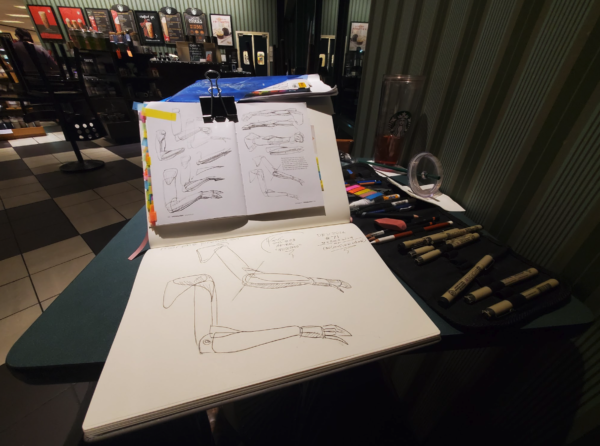
But there's more than that. There's one other trick: carry a portable drawing kit everywhere. So now, in the grey Google backpack that has my "portable office", I always carry a notebook, a small book of art instruction I can draw from, and a roll of sketching pencils, sharpeners, and erasers, and Micron pens.
With this, generally, I can allocate between 30 minutes and 3 hours to drawing on most days, but not every day. (For example, a day that you're sick, or flying or traveling, or the big friends and family Christmas party, are all days in which near zero drawing gets done). So building up a buffer is essential to finishing a year.
And once you've allowed building up a buffer, you can do more than that. The point is not to do a streak of consecutive days drawing; the point is having done one drawing for every day in the year - or, more precisely, doing a given amount of drawing practice in a year.
So first I started allowing myself "retro" posts when I got behind - originally, just for posting on this blog. But I decided it was more important to do the drawings than to blog them, and I focused then on building that buffer. Then blowing past the buffer. And finally, about October, blowing past the end of the year.
At that point, more than two months ahead, I had a choice: keep going until I finished my drawings for the year ... or start backfilling previous years. I picked the latter, allocating roughly two drawings to the future and one drawing to the past. This ensured that even if I lost a day, I'd still keep moving ahead.
I then blew past the end of 2025, and decided, rather than coast through the end of the year, I would just keep going. At this point, I'm over 90 days into 2026's drawings, and have around 120 to finish for 2024's. So as far as keeping the discipline up, I am feeling pretty good about this project.
Which is good, because around August to September, I wanted to give up.
After having spent much of 2024 and much of 2025 working on Drawing Every Day, not to mention the previous years, I started to feel my drawing wasn't improving. Frankly speaking, I wanted to quit, and seriously considered quitting as I was getting really busy around Dragon Con time.
But, I kept telling myself: you've been laid off. Your major consulting contract has come to a close. And you have time to write your novels. If you don't put in the time and the hours now, you'll never become a comic book artist, and the comic books that you want to write and draw will never be completed.
So I committed to finishing 2025. And as I did that work, I started, very slowly, to notice incremental improvements in my drawings. Feet were not quite as terrible. Hands were not quite as impossible. And the shape of the human body started to feel a little bit less like unknown territory and a little bit more mapped.
Frankly speaking, I don't ever think I'm going to be a "great artist". As I understand it, individual differences in innate talent can account for more than a tenfold difference in quantity and quality on many cognitive tasks, and I think I have been blessed with a great artistic interest but not as great an artistic aptitude.
But the bulk of the quality of any individual's performance is not related to their innate talent, but instead into their learned skill. The so-called "ten thousand hours of practice" needed to become an expert is a very real thing, and almost every expert has put in a similar number of hours to end up where they are.
At ~30 minutes to 1 hour for a drawing, I'm getting roughly 200 hours of practice in a full year, with about 500 hours under my belt in the Drawing Every Day project. For contrast, Kimon Nicolaїdes's The Natural Way to Draw course of practice is about 900 hours of practice, and if Jim Lee did 10 hours a day, 5 days a week for 50 days in his gap year, that would be 2500 hours of practice. Clearly, I have a long way to go.
But I could do it, in a year. Nothing stopped me - not friends or family, writing or research, consulting or even a full-time job, counting the 2/3 of a year I finished in 2021. In fact, I think with the principles of practice I've developed for Drawing Every Day at least a month ahead, I would have easily finished 2021.
And I enjoy it.
So nothing is stopping me from Drawing Every Day for the next ten years if I want to. And if I keep it up, the one day I'll find, ten years have got behind me ... and 3650 completed drawings will be under my belt, for something like 2000 hours of practice. I'm guessing comic book projects will be easier then.
What is Blogging Every Day? Well, that seems simple enough, right? If you blog every day, then you blog every day. Bloggers like John Scalzi at Whatever and Caitlin R. Kiernan at Dear Sweet Filthy World pop out a blog post almost every day, so, that would count, right?
Well, no, because they're blogging machines, and I'm not. If they happen to blog every day, then it's because protons haven't decayed. If I happen to blog every day, then that's damn dumb luck that there were a few days in a row that I blogged. That's just "happening to blog on consecutive days".
No, what I mean is taking on the challenge of producing a blog post for every day of the year.
I've had great luck with challenges in my creative career - 24 Hour Comic Day (draw 24 pages in 24 hours), the 48 Hour Film Project (shoot a film in 48 hours), Script Frenzy (to produce 100 pages of script in a month), to the granddaddy of them all, National Novel Writing Month (write 50,000 words of a new novel in one month, a challenge at which I have succeeded at forty-plus times).
So I've invented my own challenges. Drawing Every Day was initially difficult, but I succeeded at it last year for the first time - more on that tomorrow. Writing Every Day also is scattershot, as is Coding Every Week. Music (Practice) Every Day is deliberately getting sacrificed for the writing and drawing. And Social Media Every Week makes me break out into hives, which we're having some success treating with cat therapy.
As for Blogging Every Day, here's the rules of this challenge:
The challenge starts in a calendar year (say, twenty twenty six).
The goal is to produce one post for every day in that year.
You can schedule posts ahead to deal with obligations.
To count, the post must be intended for that day.
"Retro" posts for missed days are allowed.
Success is scheduling a post for every day in the year within the year.
Completion is writing a post for every day in a year, regardless of when it is written.
"To count, the post must be intended for that day" needs a little explanation. If you've not been blogging, and something happens - like a family party you want to share, or a movie you want to review, or someone being wrong on the Internet - then that motivated post doesn't count as blogging every day. If you are blogging every day, then all topics are fair game - but don't count posts that weren't taken on as part of the challenge, because then you're back to depending on luck, or proton decay.
"Retro" posts and "Completion" also deserve a statement. For my Drawing Every Day project, I draw far ahead - about 80+ days right now for 2026 - since I know my drawing is "bursty". But I can pretty much similarly guarantee I'll miss a post at, say, Dragon Con. So you can "backfill" and have it count - as in my Drawing Every Day project, where I have now started backfilling 2024's missing drawings (I have about 120 drawings left to finish for 2024).
This is different than, say, Vandy Beth Glenn's approach to Running Every Day. At one point her "running every day" streak had gotten insanely large, like over 1,000, and someone asked her: "Do you ever miss a day?" Her response: "No, because I would not have been running for every day."
That's great, but I'm not trying to create a streak of consecutive blogging: I'm trying to create a collection of blog posts for every day of the year. So I will blog, schedule posts, blog ahead, backfill, retro, whatever to put myself in the habit of making sure I've blogged every day.
And what I've found with the Drawing Every Day project is that that discipline - treating it as a collection that I am trying to fill, rather than a streak I'm trying to achieve - has enabled me to build up a buffer and build up my drawing muscles and get my regular practice going.
Here's to that for Blogging Every Day 2026 ... Day Two!
So! 2025 was a hell of a year, wasn't it? Seems like a lot of them have been that way for the world since ... oh, I don't know, 2016 ... and for me personally since roughly 2019. Mom's death, major work disruptions, Covid, a bit of a sunny spot in 2022 when LLMs hit robotics (roughly a year before ChatGPT went live!), the layoffs in 2023, and the whole chaotic mess of the elections in 2024 and the authoritarian takeover of the US in 2025.
But, we made it. The pandemic seems gone and is not coming back. Trump hasn't gotten away with everything he wanted to, and every once in a blue moon he does something not entirely stupid. And our great big party this year didn't have a huge blowup like the last four years, but was a great success!
We accomplished this by reaching out to everybody and involving them in the party planning individually, rather than sending a huge email blast and hoping, and then engaging people when they arrived. It worked surprisingly well! We even had - gasp - civil political discourse! And a fire alarm, but, that was unrelated.
Over 2025, I didn't keep up with blogging every day like I wanted to, but I pretty much nailed writing, getting about 200,000 words of rough draft written, plus a scientific paper; and as for drawing every day, I'm almost 90 days ahead for 2026 already. So I hope to start posting those soon as part of this blog.
More news to share later, but for now ... Happy New Year!
May yours not be all bad.
-the Centaur
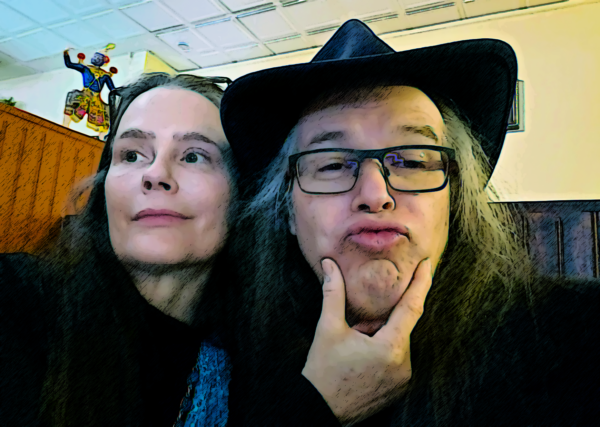
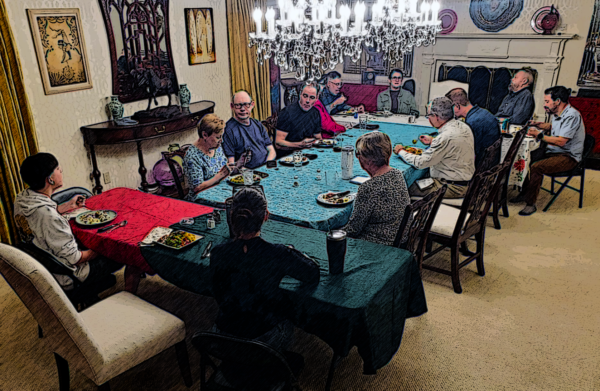
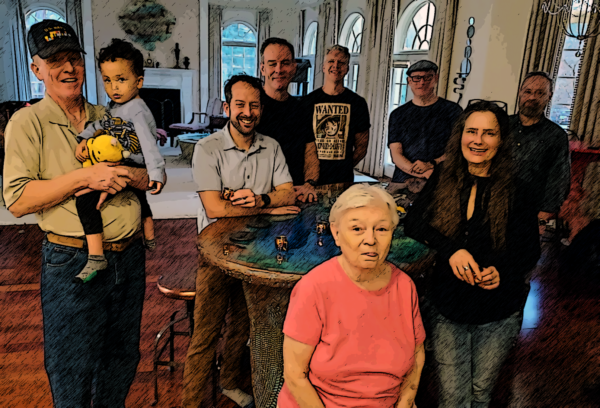
Pictured: Me and Sandi at a dinner with her mother a few days ago, then from a nearby Barnes and Noble over dinner; and two pictures from our "Edgemas" party, now in something like its 35th year depending on how you count (34 years since we called it Edgemas, 37 years since our first holiday party).
SO! Not a lot of blogging recently, because I've been focused on spending time with friends and family (or cleaning the house in preparation for spending time with friends and family) and, beyond that, I have a scientific paper due the fifteenth, PLUS I'm continuing to work on LEGACY OF THE EXTRA CREDIT PROJECT and am behind on my wordcount (I never seem to get a Nano-like challenge done in one of the non-Nano months, but, hey, there's a first time for everything, and I'm not THAT far behind).
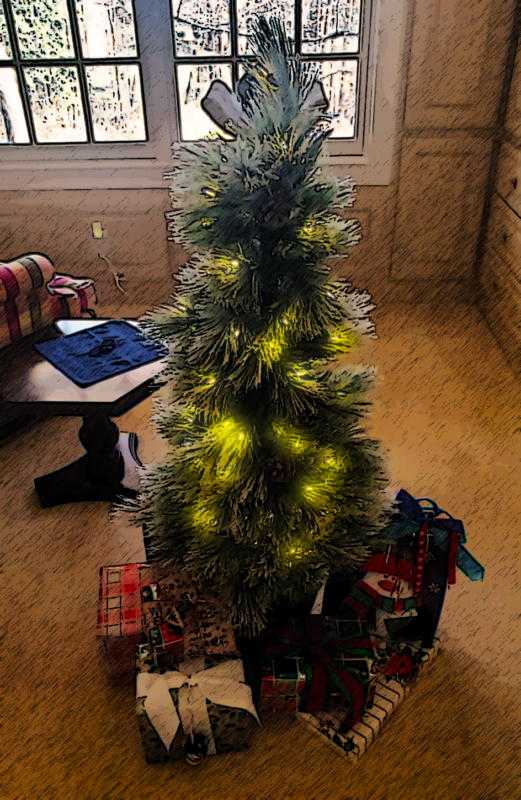
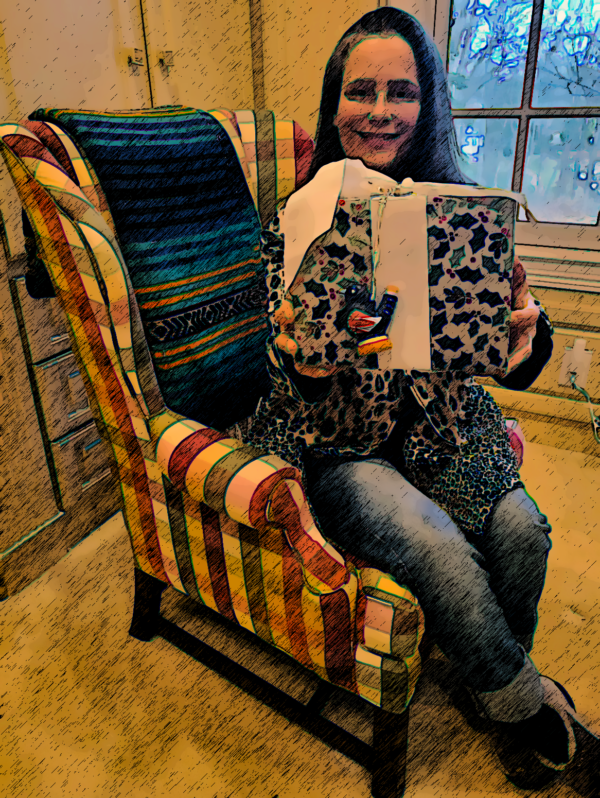
So! In lieu of a long blog post, enjoy this festive tree, which I had set up elsewhere in the house as a permanent accent slash night light years ago, but which my wife snuck up to our bedroom closet and loaded with gifts while I slept in the night ... because, while she's not into Christmas, she knows I am.
Let's celebrate joyfully to thank God for Jesus, or as they say in the secular world ... Merry Christmas!
-the Centaur
Pictured: Our little Charlie Brown tree, and my wife with a surprise present.
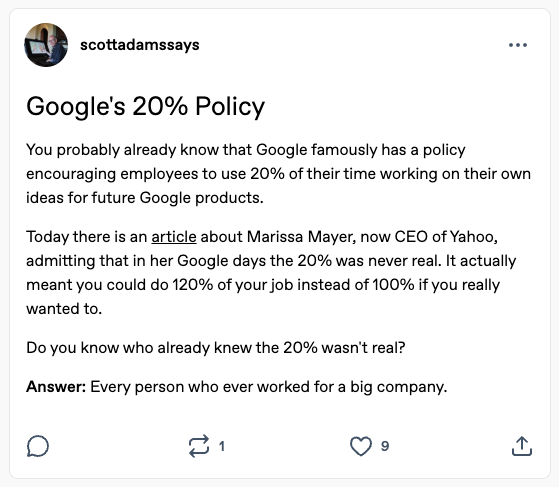
As usual, Scott, and Marissa, don't know what the fuck they're talking about.
First, Scott.
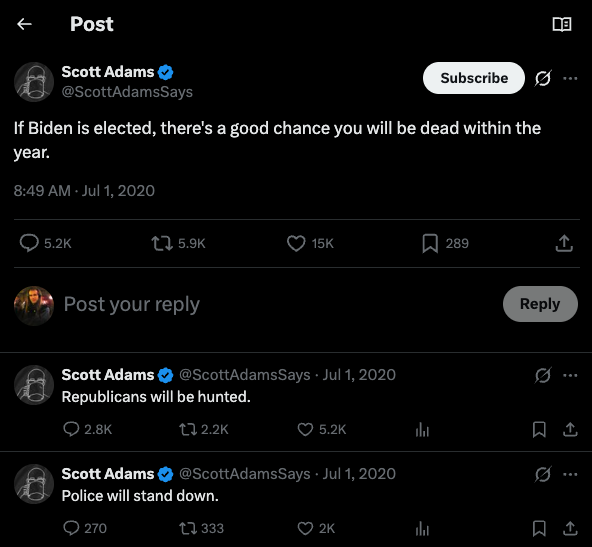
Scott Adams spent 16 years working in big businesses, and hated it so much that he heroically burned the midnight (well, 4am) oil for several years, ultimately creating the beloved, insightful and world-renowned Dilbert cartoon upon which his reputation rests. Then Scott spun off into other political and philosophical ventures, some of which turned out well (such as his successful analysis of and prediction of the success of Donald Trump's first term) and others which did not (such as imagining that there was a "good chance Republicans be dead within a year if Joe Biden won the 2020 presidential election". But hey, he's a humorist, right, it's satirical, right, and not some motte-and-bailey play, right? Right?)
Scott, you've been right about many things, though I sincerely hope you were wrong about your illness and its unfavorable prognosis. I hope your prognosis improves and you get access to all the treatments that you and your doctors want, and that they are effective in improving your longevity and quality of life.
But about Google, you spent 16 years at banks and telecoms back in the last millennium. I have spent the past 26 years in the startup and dot-com space, including 17 years at Google, longer than your entire big-business career as reported. Your information is stale, your direct knowledge of Google's internals is virtually nonexistent, and so your arguments are invalid.
Now, Marissa.
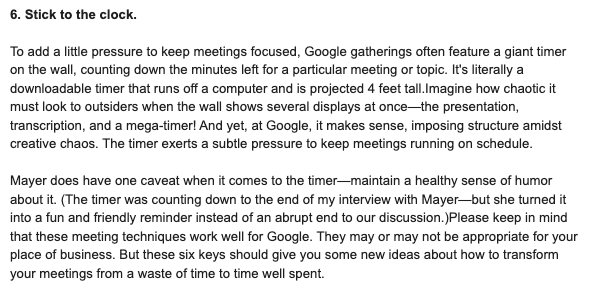
Marissa Mayer was an executive at Google known in the Valley for "always ending meetings on time". Well, it turns out, her actual quote was "stick to the clock", which makes a little bit more sense in terms of flexibility, but still isn't accurate, because when she was meeting in the conference room directly across from my office in Building 43 of the Googleplex, she almost never ended meetings on time.
Marissa's meetings running over happened so often it got to be a joke, until it wasn't. The teams in nearby offices learned to try to schedule meetings in other conference rooms in case Marissa or another VP was running over. Until I, meeting with two Google New York visitors, had the uncomfortable experience of the two of them barging into the room where Marissa was still finishing up her meeting 5 minutes after the hour, not knowing that she was a VP, and just knowing that she was rude. Well, I guess they showed her.
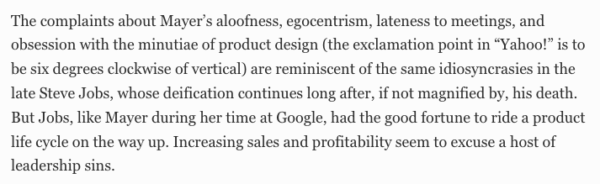
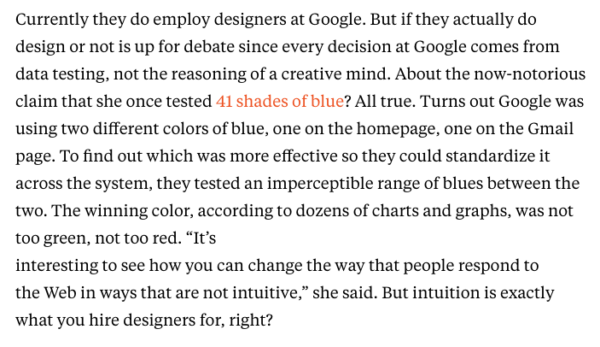
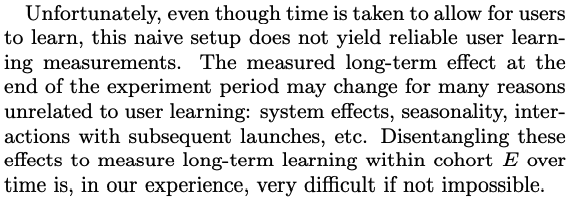
Now, I could pick on her continued lateness at Yahoo, or her inappropriate focus on micro-details of user interface design - such as the rumor that she once tested 41 shades of blue on the Google home page. Now, if you don't know how statistics work, you might think that's data-driven design; however, if you do know how statistics work, you know that the test-retest reliability of different shades of blue in a complex user interface exposed to millions of users is likely to be very low over any appreciable span of time, and that Marissa was wasting engineer's time and Google's money just chasing noise.
But what I really want to pick on is her comments about 20% time.
Marissa, I'm sorry, but I don't have as much good to say about you as I do about Scott. I'm genuinely sorry your stint at Yahoo didn't work out, but to all external appearances it's a direct consequence of the toxic environment you helped create in the teams you worked with at Google. This goes beyond creating a hostile relationship between user interface and software engineering, something I had to contend with long after you left the company; this goes beyond pursuing a quixotic attention to micro-detail that is directly contradicted by researchers at Google itself (admittedly, long after you left).
It even goes beyond your toxic perfectionism, repeatedly killing development projects internally because their additions to the search results didn't reach some absurdly high degree of accuracy; this helped foster a Google-wide attitude of caution that meant internal teams couldn't develop certain products, and we had to buy external companies like (the very nice) Metaweb for millions upon millions of dollars - but hey, guess what? The external systems we acquired also didn't reach the same absurdly high degree of accuracy, and if we had just let our internal teams develop shit and iterate to perfect it, we would have built more, internally, and cheaper, with a more harmonious and less stressful internal culture.
No, it's because you don't know what the fuck you're talking about about how Google works. You worked for Google for 13 years, but I worked for Google for 17 years, and in the six years we overlapped at the company plus the previous year in which I was recruited, the perception you apparently acquired of how Google worked was directly contradicted by the available evidence, so your arguments are invalid.
Now.
Google's 20% time.
Google's 20% time, in case you don't know, enabled Google employees to spend up to one fifth of their time working on a personal project. It had to be for the company and your manager had to improve, but otherwise it was flexible. Google recruiters directly advertised 20% time as one of the perks of being at Google. I was allowed to directly interview Google employees who confirmed that it existed, though at least one of them said that they were so interested in their main project that they had no time for 20% efforts. When I joined Google, as far as I can recall, every manager I ever had was supportive of 20% time, and every team that I was on, and many of the teams that surrounded us, always had at least one person working on a 20% project, some of them quite substantial. I myself worked on a fair number of 20% projects. Most importantly, it was never something that you had to work 120% time to do in all the time I worked there.
On that point, most notably, robotics at Google began, as far as I personally know, at the 2010 Robotics 20% Taskforce, when about 20 engineers, user interface designers, and product managers pooled their banked up 20% time and got together for a couple of weeks to prototype robotics systems. That led to an early "Cloud Robotics" team robotics team that formed in late 2010 or early 2011, first presenting its work publicly at Google I/O in 2011. That project didn't survive, but the team did, and many of its alumni went on to other Robotics projects at Google, notably Replicant and later Robotics at Google.
During my time there, Google was heterogeneous in both time and space. There were many individuals, managers, teams and divisions that did not participate in or support 20% time. And there were many times that teams that did support it were engaged in full court press work that didn't leave time for 20% work.
But 20% time was an important part of most teams that I worked at and most teams that I worked with during my 17 years at the company, and while there were a few skeptics, it remained an important part of the company culture during my entire time there, making key contributions to Ads, News, and Robotics. As far as I know, it was still part of the company culture right up until when I was laid off in 2023. After that, the people I know working at Google are all in Google Gemini and are way too busy, so, who knows. But the layoffs and Gemini happened way after Scott's and Marissa's comments in 2015, so it isn't pertinent.
Or, put another way ... Marissa Mayer and Scott Adams didn't know what the fuck they were talking about when they tried to "debunk" Google's 20% time.
-the Centaur
P.S. The Wikipedia page on Google's implementation of "Side Project Time" says [citation needed] to "The creator of [Google News] was Krishna Bharat, who developed this software in his dedicated project time.
Well, you can fucking cite me and this blog post. Krishna Bharat was my second manager at Google, and he told me directly in one of our 1-1 conversations that he created Google News as a bunch of Perl scripts following the 9/11 attacks to help him keep up with the headlines. Krishna was a master of spinning up small things into something big, and turned that humble beginning into the product that became the world's largest news aggregator. I don't remember whether he mentioned it was developed in what we later called 20% time, but it wasn't his primary responsibility, Google obviously supported and encouraged his work on it, and the entire arc of his side work and subsequent development is precisely consistent with the use of 20% project time that made Google one of the most vibrant and creative companies in history.
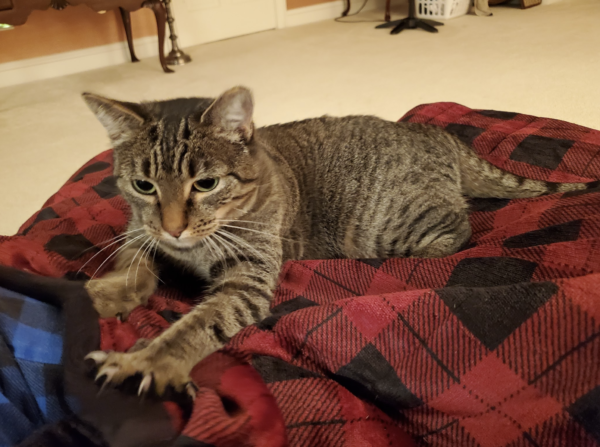
Pictured is Lovi, the newest of our cats, a stray from San Jose which Sandi started feeding, then befriended, then adopted once she'd become dependent. Everything was going fine with Lovi even after the move, until she was introduced to the other cats. Loki did a double take when he saw her, but the kittens were more freaked out, and have gradually become more and more aggressive with her. Lovi started peeing on stuff, and I eventually deduced that the kittens were likely keeping Lovi from the litterboxes.
We separated them, and everyone calmed down. Apparently this backsliding is a thing that can happen when introducing cats, and you need to be willing to do a reset. But, despite the calming down, it took a week or so for Lovi to start warming back up again. She used to hop up on Sandi's lap, but quit that when she was introduced to the kittens. She refused to do that for me, and Sandi realized that the blanket we had on the chair where I read in the bedroom likely smelled of kitten. I replaced that cover with a new blanket, and within the day Lovi had hopped up on it and started making biscuits and rubbing on my hand.
So, mission accomplished. Here's hoping it lasts!
-the Centaur
Pictured: the new cat, on the new blanket, newly making biscuits.
Some days you just don't feel right. Other days you realize, you're not actually well.
So I found out late Friday that I've actually been sick - congestion, sore throat, and headaches kicked in pretty bad, followed by some pretty serious gastrointestinal upset most of the day Saturday. And, if I'm honest with myself, I haven't felt great since Thanksgiving, when I also thought I might have been coming down with something and then decided that I had fought it off. More or less likely I have been fighting it off the whole time, and was simply not paying close enough attention to my body.
Depressingly, I'm wont to do that.
So I took it easy Saturday afternoon once I knew what was going on, cutting back on my errands and trying to give my body a chance to relax. I did the same thing the next morning (breaking the illusion of the retro blogging, I know) and slept in rather than go to church. By the midafternoon, I was feeling better.
Sometimes you need to go easy on yourself, but it also requires paying attention to what your body needs.
-the Centaur
Pictured: A pair of tomato sandwiches I made at home, which itself was taking a break from my normal Saturday hit-Panera-then-run-errands routine.
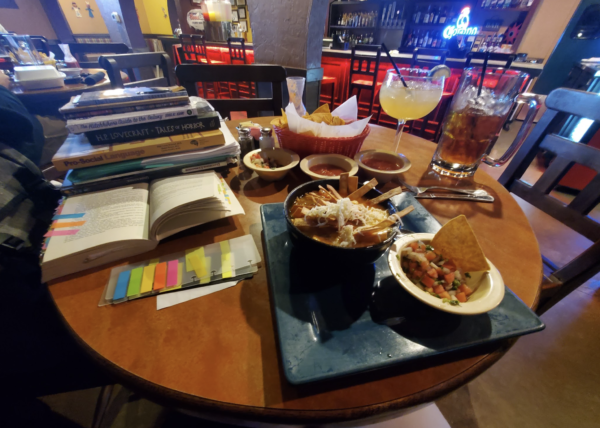
Missed a couple days blogging because of a good day writing (plus another reason which wasn't apparent at the time). But, looking retro at those past few days, one thing I do notice is that you sometimes need to change it up. At Monterrey by the Mall, my favorite dish, by far, is the fish tacos (which is generally one of my favorite meals anywhere). But, in the cold snap we've been having in Greenville this early December, it was surprisingly good to have the hot chicken soup instead, with some quesabirria as a chaser. Sometimes, if you're a person who's prone to ruts, you need to push yourself outside your comfort zone. Even if you don't find your new favorite, you may find something to keep yourself warm a cold winter night.
-the Centaur
Pictured: Chicken soup and my evening reading pile at Monterrey by the Mall's high-top tables in the bar.
So I'm actually doing well on the "drawing every day" project, but am deliberately holding off resuming those posts until I'm convinced the "blogging every day" project is running solidly again. But one interesting trick from "drawing every day" is another rule of three: the three drawing rule.
My actual rules for "drawing every day" are a topic for another day (as I'm trying to mentally categorize them myself) but the main point is, it isn't a challenge, an attempt to create an unbroken streak of days drawing; it's an exercise, an attempt to enforce a total amount of practice drawing in a year.
Since I can't always sit down for the 30 minutes to 3 hours needed to do the drawings, what I've started doing is the "three drawing rule": try to do at least three drawings in a session. If I miss a day or two, then the three drawing rule keeps me on track, so I'm still doing roughly a drawing a day.
The bonus is, if I am getting my drawing time in every day, I have bonus drawings that I can accrue to one of the other years. I already tanked all my drawings for 2025, and so now I'm drawing a head into 2026 (about 70+ drawings) and backfilling 2024 (about ~120 drawings from the end).
And, strangely enough, I am actually seeing small signs of improvement. I can still see a lot of room for improvement, of course, and I don't have the nimbleness nor facility that I want.
But things are, slowly, getting better.
Drawing every day.
-the Centaur
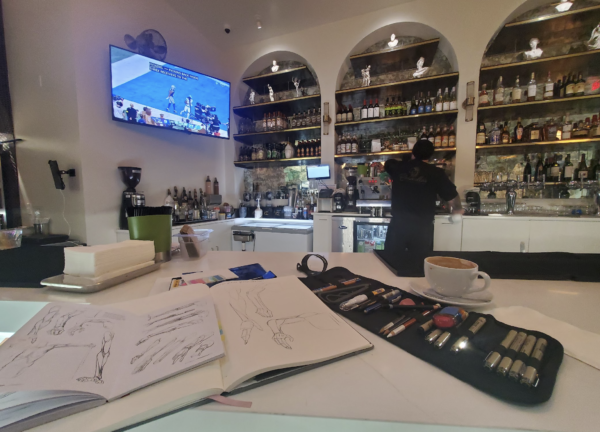
Pictured: Drawing at Carmella's Cafe and Dessert Bar, a late-night coffee joint which I visited after going to Hall's Chophouse for my traditional after-Nano celebration / planning-next-steps dinner.
So, I'm a carnivore married to a vegan, but there are vegan foods that I like - my wife makes a mean stuffed squash dish, and I genuinely look forward to winter squash season where we get this parade of different squash and different stuffings with great side vegetables for several weeks. And the two-black-bean-enchilada "La Vegetarian" plate at La Parilla Mexican Restaurant, when served vegan style plus a side of mushrooms, with the mushrooms and lettuce dumped on top, is one of the best things on the menu.
But then there's vegan food that I would "non-ironically" make. Vegan food not to eat because it's vegan, but because it is genuinely delicious on its own. The canonical example, is of course, tabbouleh, which is the national salad of Lebanon; it's one of my favorite dishes, vegan or not. Vegan baklava, made with vegan butter, is another example: ever since I started making it, I have preferred it, as the vegan variant is lighter, fluffier, flakier and tastier than its traditional counterpart.
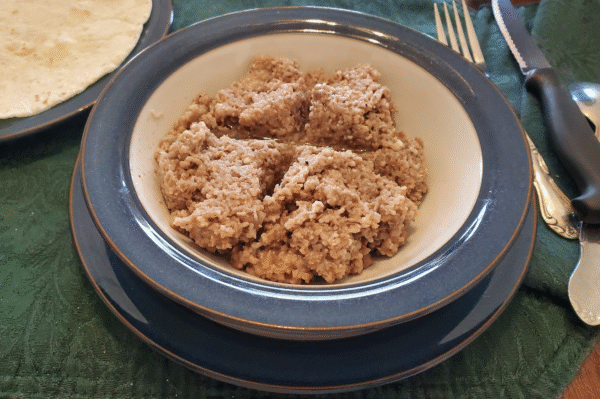
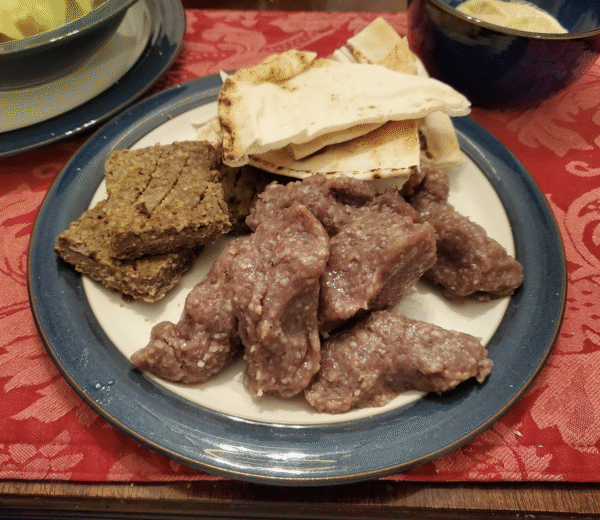
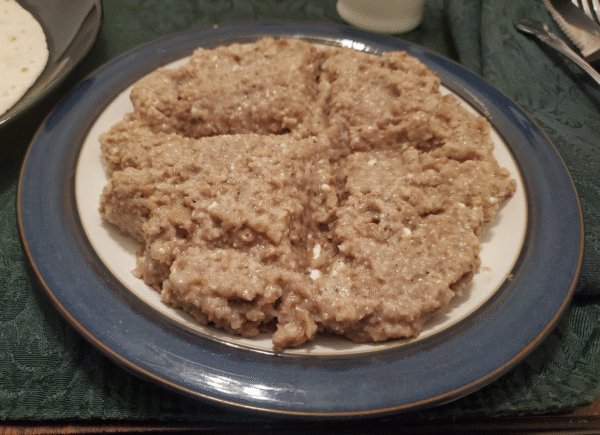
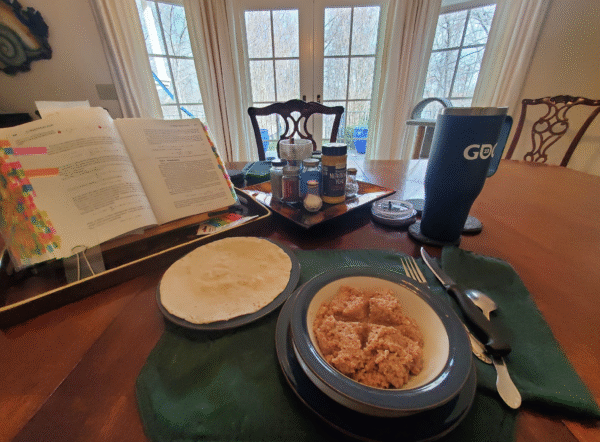
But another one, surprisingly, is vegan kibbey nayye, a raw steak tartare dish which is the national meat dish of Lebanon. I will never knock Cousin Jay's traditional kibbey nayye, which is every bit the equal of his mother Aunt Theresa's or my mother's kibbey nayye; both of them made excellent kibbey, and Jay has risen to the challenge of taking the banner in the next generation. You can see Jay's kibbey, both cooked and raw (nayye) from last Saturday's pan-family Thanksgiving dinner, below:
Now, you'd be surprised, but kibbey nayye made from Beyond Beef is every bit as good as regular kibbey - so much so that I keep a pack or two of Beyond in the freezer just so I can make vegan kibbey nayye on any occasion. The recipe is dead simple: thaw out one packet of Beyond Beef in the fridge, wash one cup of fine bulghur wheat three times, soak with a fingersbreadth of water until absorbed, and drain; grate one large white onion and drain (since the onion juice will overpower the mix), and mix the meat, onion and bulghur wheat together until very thoroughly mixed. Spice with a good bit of salt and pepper, a lesser amount of cumin and cinnamon, and a small amount of allspice (but NO NUTMEG, according to my recipe book), and adjust the mix to taste. Serve in a small mound with a cross cut in it, add a little olive oil, and eat with bread.
To the kibbey nayye connoisseur, the visible texture and the color (yes, the color, even to my partially color-blind eyes) of vegan kibbey nayye is not quite as great as the original. But the texture to the palate is good and the flavor is great. I am not trying to toot my own horn here, since vegan kibbey nayye might be an acquired taste, but this last time I made it (just yesterday) it came out as best as it ever had.
So I will keep one or two packs of Beyond Beef in the freezer (two, generally, so in case you forget to run to the store or they're out, you always have that back up copy) just waiting for me to thaw it, run to the store, grab a big white onion, and pull out the grater to have a great vegan-style Lebanese meal.
-the Centaur
Pictured: Vegan kibbey nayye, traditional cooked and raw kibbey, the traditional "plate with a cross in it" style of presentation, and then kibbey nayye with pita bread (shh, actually tortillas, but that's what I happened to have on hand that day).
So there's this rule I've developed to deal with cat food. If one cat doesn't eat some food that you just put down, that doesn't really mean anything: cats are finicky. If two cats don't eat some food that you just put down, that doesn't necessarily mean anything: it could be coincidence. But if three cats in a row don't eat some food that you just put down, it probably means the food is bad and you should toss it.
The food was bad. The replacement food was a hit.
-the Centaur
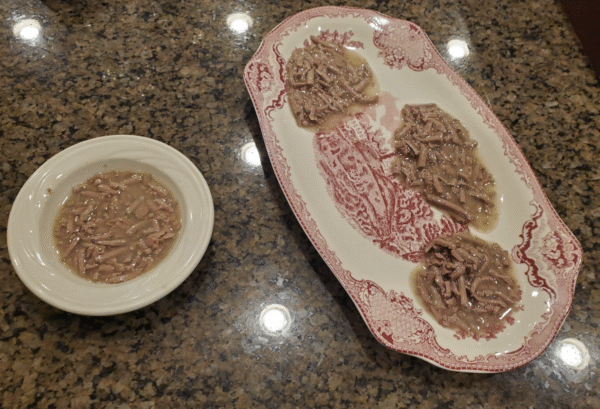
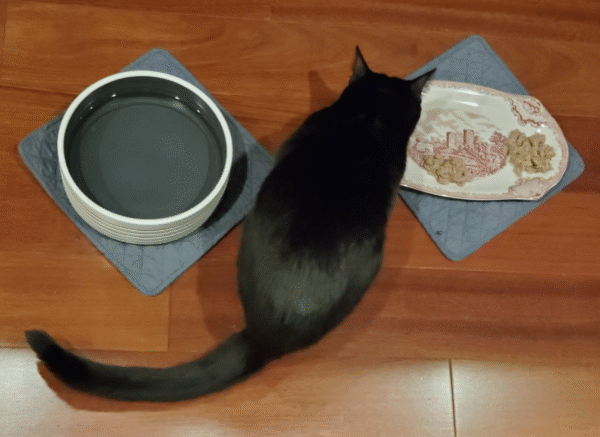
Pictured: food that three cats refused, and one of those three cats chowing down on its replacement.
Seen on bushes opposite my office, when trying to coax our at Loki to either go outside or go take a nap. I'm partially red-green color-blind, so something has to be *really* red for it to stand out to me as red. Once a psychophysicist told me that, since I had three detectors like everyone else, that my vision wasn't really deficient; my color axes were just skewed from everyone else's. But that doesn't take into account the overlap of my red-green detectors, which means there are many instances of color that I can discriminate, but don't really notice. I ... suppose that would disadvantage me if I had to forage for food in the wild rather than at Whole Foods, as I do believe the berries that I would notice would likely be toxic.
I noticed these. And - just going out on a limb here - I think these berries are, very probably, very red.
-the Centaur
Pictured: Green bushes with red winter berries, which Google Lens thinks is heavenly bamboo, a bush with berries supposedly toxic to birds which, given the somewhat consistent theme of the landscaping of the house (pretty-but-toxic-useless-or-labor-intensive), does not surprise me.
So! The National Novel Writing Month organization may be gone, but National Novel Writing Month lives on! Not just in Nano 2.0, but in my own writing. I've written two and a quarter million words in Nanos over the years, by far the bulk of my writing output, and I'm not stopping now!
For this month, my forty-fifth Nano or Nano-like challenge, I resurrected a fifteen-year-old project ... the Spookymurk! The Spookymurk is a nerfed D&D-like world - a cosy fantasy, in today's terms - which, according to my notes, I stopped work on when I got the notes back for Dakota Frost #2, BLOOD ROCK.
I had four novels come out since I first started playing with the Spookymurk, and I think that's probably a fair trade. But the story was calling to me recently - I even started drawing some of the characters as part of my Drawing Every Day project - so I resurrected Book 1: THE LEGACY OF THE EXTRA CREDIT PROJECT.
This was my forty-third successful Nano, and as always, great inventions come from the pressure that writing ~1700 words a day puts on your story. But, as I went over my old notes, I'm surprised at how extensive they were: this was a rich world, and I'm kind of sad I put it away for so long.
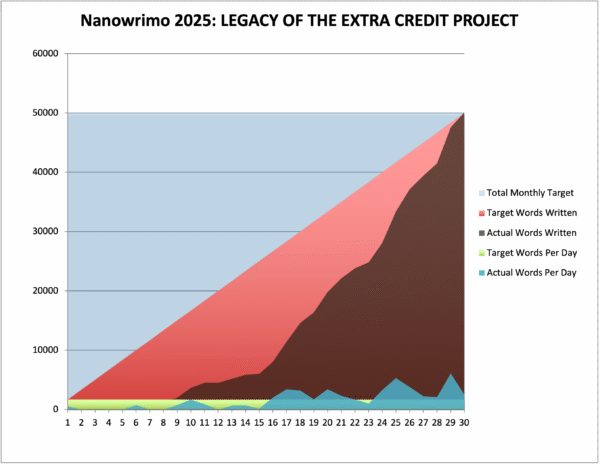
Other than a brief blip around day 8, where I was as far behind as I ever have been, this project was pretty typical of recent Nanos: a slow start as I re-acquainted myself with the world, and a strong finish as I typically ended up with more ideas than I could write down in a day. I'm going to write more tonight, in fact.
And, at last, an excerpt. I liked this bit and thought it turned out well, though it was perhaps one of the most difficult pieces of writing I ever had to write, since I was under spiritual attack (as I have been for a lot of this project, for some reason). Almost every interruption imaginable tried to stop this text from existing:
The “book” is perhaps the most amazing development since the invention of language.
The invention of “language,” itself, of course, had serious drawbacks, requiring evolution to greatly expand our gooey, calorie-hungry brains, with a consequent increase in later-life lower-back problems from all the extra weight, and a rise in complaints from women in labor that whoever this “evolution” person was, he could go fuck himself if he really wanted to push an entire human head out of that small a hole, and she’d take the epidural now, thank you.
The “speech” invention greatly improved on language by letting people actually share their ideas, but it required flapping one’s mouth so hard that the literal air figuratively knocked your ideas into someone else’s head. The concurrent “signing” invention greatly improved the accessibility of speech, both to hearing impaired individuals and to anybody who happened to be dying in the cold vacuum of space, but at the cost of angry debates among linguists, many of whom didn’t like having to study gesture and language at the same time, and had become overly attached to the idea of titling their masterworks on the origins of language something like “It All Started With the Word.” This debate was resolved, however, by Moan Skychomp’s development of the unified cognitive theory of profanity, which proposed that speech and gesture developed together when some forgotten genius stubbed their toe on a rock and simultaneously invented both “swearing” and “the bird” while cussing the very first “blue streak,” a hypothesis documented in Skychomp’s popular magnum opus, “It All Started with the F-Word.”
With the release of “writing,” language really started to jazz it up. This invention went through a rapid sequence of “point updates”, from tally sticks to cuneiform to hieroglyphs to scrolls, and soon there was an absolute explosion of people writing things down for no damn good reason. But, even written down, language was still hard to share, as tablets were heavy, scrolls were cumbersome, and pharaohs tended to send armies after you if you carted off a wall inscribed with hieroglyphics.
The “book” changed all that.
A “book” is an idea. Now, the book is strongly associated with its popular “codex” form factor consisting of thin leaves or “pages,” bound into a portable rectangular prism noted for both its random access features and its tendency to close upon itself unexpectedly just when you’ve found the page you want. But the actual book invention per se is the simple notion of gathering the ideas you want to share into a precisely-defined, self-contained, and, well, share-a-ble unit. Whether as text gathered into a codex, words spoken aloud, bits transmitted into an e-reader, or substantial form conjured into an infinite scroll, all editions of a book can be seen as sharing the same essence of “book” (except audiovisual forms, which often lose something in translation, leading to the common phrase, “the book was better than the movie”). In essence, a book lets the same piece of writing be shared as multiple copies across a vast reach of space and time.
And so, as an idea for sharing ideas, the “book” became the most successful tool for disseminating knowledge in the history of human civilization, enabling “authors” to share their ideas with “readers” not just all over the world, but even across the ages of time itself.
At least until a mad wizard decided to set every codex in existence on fire.
The structure of LEGACY OF THE EXTRA CREDIT PROJECT leaves me a lot of room to work in little sidebars like this between the actual action chapters, so I am having a great deal of fun with the story of Q'yagon Nightstrider the zebra elf, Darina Voidweaver the spidaur, and their many fun misadventures.
Of my post-Dragon Con projects, this was #3 of the ones that have urgent deadlines before the end of the year. There are 2 more, one due tomorrow, and one that was pushed back to January 15th, so hopefully starting on Tuesday I can return to blogging on a more regular basis.
Onward!
-the Centaur
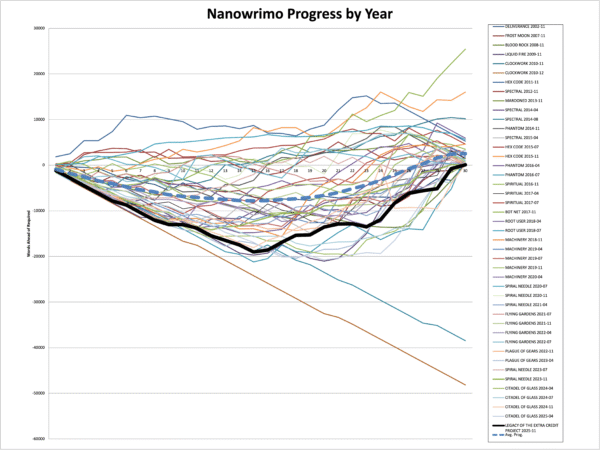
Pictured: Stats from the last 45 nanos, and from this year.
Hey folks, the Kickstarter for Writing Memoir in Flashes just funded, but if you want to get some of the cool swag, there's still time to back us! If you want to, you can do so here:
This second book in our writing line is by Lita Kurth, a big proponent of both memoir and flash fiction, and I'm really looking forward to this coming out!
This book aims to democratize the process of memoir writing. We all have stories to tell, and Lita's book can help you realize that telling your story doesn't have to be writing something as long as Game of Thrones.
Unless you're the Most Interesting Man in the World. For him, that would just be getting started.
So I frequently stack too many projects on top of me to adequately attack all of them - perhaps this might be a consequence of me running upwards of two hundred projects at a time, but who can say - and the consequence of that is, some tasks that aren't so important get the short end of the stick. For example, blogging (as you may have noticed) or going through bills (which pile and pile and pile until I doze them).
But this year, my drawing every day project has NOT been getting the short end of the stick.
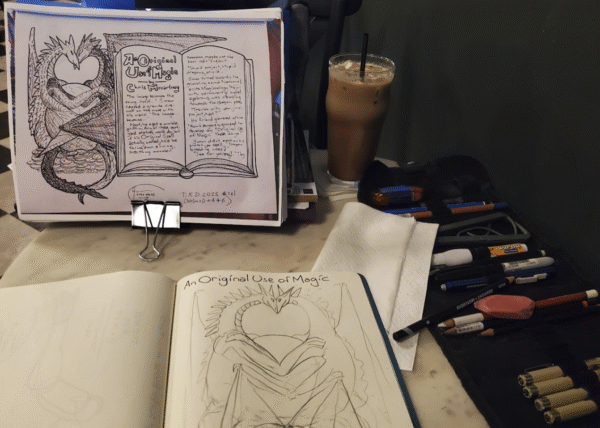
I want to talk about it more later, but I've kept up a great buffer, and am well ahead of the game for 2025. So far ahead that I've started doing more complex drawings, rather than just the drawing exercises. Above, I'm redrawing one of my sketches for the Instant Book "An Original Use of Magic" for Thinking Ink Press. Frankly speaking, I'm not a great artist. But I have learned a trick for producing art better than I'm normally capable of: I redraw my own artwork over and over again until I get it right. I think it is progressing quite well.
I still have a long way to go. But I can see that I'm starting to make progress.
-the Centaur
Pictured: My portable drawing setup, which I carry with me almost everywhere I go, to facilitate the "Drawing Every Day" project.
... and we had a nice afternoon visiting family and nice evening relaxing afterward. But despite the fact that it worked out well for us, it's important to take some time out to share that news with your friends and family, because political action, as important as it is, can sometimes backfire on you.
More in a bit. But everyone is safe.
-the Centaur
Pictured: A New Fashioned at the 07, a restaurant with a great vegan menu that my wife and I enjoy quite a bit - and is becoming a new favorite of her mother, who recently moved to town.
So today I'm going to a #nokings protest in downtown Greenville to stand up for our democracy in the face of the authoritarianism creeping over our whole society since the re-election of Donald Trump. I'm never going to be someone who criticizes my opponents for everything that they do, but ever since Trump chose to lie about his affinity for the ideas in Project 2025 - after praising the project at the Heritage Foundation in 2022 and before embracing it in his administration in 2025 proper - we've been sliding more and more to a "unitary executive" idea in which the President has plenary power to do whatever the hell he wants.
Not in my country!
So we're going to a #nokings protest in downtown Greenville, South Carolina. No Kings may be a movement, but it's also an idea - and an ideal. For example, the No Kings Act was designed to counter the Supreme Court's blatantly unconstitutional grant of immunity to the President - when the constitution implies exactly the opposite: "the Party convicted shall nevertheless be liable and subject to Indictment, Trial, Judgment and Punishment, according to Law."
Now, Heaven knows I'm no fan of Donald Trump's policies, but there's a difference between disagreeing with what he wants to accomplish and opposing the methods by which he's doing it. Sure, I don't like many of the things that he's doing, but that's a normal part of the political process: you don't always get what you want. But the actions of ICE, the roadmap of Project 2025, and Trump's embrace of strongmen is a direct threat to the civic foundations of American democracy, and must be stopped - for everyone's sake.
So, even if you're a conservative supporter of Donald Trump, you should join these protests. The unitary executive theory is the path to authoritarianism, and while the powers and privileges of strongmen may be appealing to Trump and some of his followers, we're driving dangerously close to the edge in this country, and if we slip down that cliff into dictatorship, it can take decades to get back. As Rush Limbaugh said, if you loan power to someone, you've got to watch them. And even if you agree with Trump, you should not give him any more power than he needs - or the next president may use that power against you.
It's going to take a long time to get our civic ship righted; it's time to get started.
So I wasn't kidding about the long slog: I am still chewing through the classic textbook Pattern Recognition and Machine Learning (PDF) by Christopher Bishop, day and night, even though he's got a newer book out. This is in part because I'm almost done, and in part because his newer book focuses on the foundations of deep learning and is "almost entirely non-Bayesian" - and it's Bayesian theory I'm trying to understand.
This, I think, is part of the discovery I've made recently about "deep learning" - by which I mean learning in depth by people, as opposed to deep learning by machines: hard concepts are by definition tough nuts to crack, and to really understand them, you need to hit them coming and going - to break apart the concept in as many ways as possible to ensure you can take it apart and put it back together again. As Marvin Minsky once said, "You don't understand anything until you learn it more than one way."
To some people, that idea is intuitive; to others, it is easy to dismiss. But if you think about it, when you're learning a subject you don't know, it's like going in blind. And like the parable of the blind men and the elephant - each of whom touched one part of an elephant and assumed they understood the whole - if you dig deeply into a narrow view of a subject, you can get a distorted view, like extrapolating a giant snake from an elephant's trunk, or a tall tree from its leg, or a wide fan from its ear, or a long rope from its tail.
Acting as if those bad assumptions were true could easily get you stomped on - or skewered, by the elephant's tusk, which is sharp like a spear.
So back to Bayesian theory. Now, what the hell is a "Bayes," some of you may ask? (Why are you reviewing the obvious, others of you may snark). Look, we take chances every day, don't we? And we blame ourselves for making a mistake if we know that something is risky, but not so much if we don't know what we don't know - even though we intuitively know that the underlying chances aren't affected by what we know. Well, Thomas Bayes not only understood that, he built a framework to put that on a solid mathematical footing.
Some people think that Bayes' work on probability was trying to refute Hume's argument against miracles, though that connection is disputed (pdf). But the big dispute that arose was between "frequentists" who want to reduce probability to statistics, and "Bayesians" who represent probability as a statement of beliefs. Frequentists incorrectly argued that Bayesian theory was somehow "subjective", and tried to replace Bayesian reasoning with statistical analyses of imaginary projections of existing data out to idealized collections of objects which don't exist. Bayesians, in contrast, recognize that Bayes' Theorem is, well, a theorem, and we can use it to make objective statements of the predictions we can make over different statements of belief - statements which are often hidden in frequentist theory as unstated assumptions.
Now, I snark a bit about frequentist theory there - and not just because the most extreme statements of frequentist theory are objectively wrong, but because some frequentist mathematicians around the first half of the twentieth century engaged in some really shitty behavior which set mathematical progress back decades - but even the arch-Bayesian, E. T. Jaynes, retreated from his dislike of frequentist theory. In his perspective, frequentist methods are how we check the outcome of Bayesian work, and Bayesian theory is how we justify and prove the mathematical structure of frequentist methods. They're a synergy of approaches, and I use frequentism and the tools of frequentists in my research, um, frequently.
But my point, and I did have one, is that even something I thought I understood well is something that I could learn more about. Case in point was not, originally, what I learned about frequentism and Bayesianism a while back; it was what I learned about principal component analysis (PCA) at the session where I took the picture. (I was about to write "last night", but, even though this is a "blogging every day" post, due to me getting interrupted when I was trying to post, this was a few days ago).
PCA is another one of those fancy math terms for a simple idea: you can improve your understanding by figuring out what you should focus on. Imagine you're firing cannon, and you want to figure out where the cannonballs are going to land. There are all sorts of factors that affect this: the direction of the wind, the presence of rain, even thermal noise in the cannon if you wanted to be super precise. But the most important variables in figuring out where the cannonball is going to land is where you're aiming the thing! Unless you're standing on Larry Niven's We Made It in the windy season, you should be far more worried about where the cannon is pointed than the way the wind blows.
PCA is a mathematical tool to help you figure that out by reducing a vast number of variables down to just a small number - usually two or three dimensions so humans can literally visualize it on a graph or in a tank. And PCA has an elegant mathematical formalism in terms of vectors and matrix math which is taught in schools. But it turns out there's an even more elegant Bayesian formalism which models PCA as a process based on "latent" variables, which you can think about as the underlying process behind the variables we observe - using our cannonball example, that process is again "where they're aiming the thing," even if we ultimately just observe where the cannonballs land.
Bayesian PCA is equivalent (you can recover the original PCA formalism from it easily) and elegant (it provides a natural explanation of the dimensions PCA finds as the largest sources of variance) and extensible (you can easily adapt the number of dimensions to the data) and efficient (if you know you just want a few dimensions, you can approximate it with something called the expectation-maximization algorithm, which is way more efficient than the matrix alternative). All that is well and good.
But I don't think I could have even really understood all that if I hadn't already seen PCA in half a dozen other textbooks. The technique is so useful, and demonstrations about it are so illuminating, that I felt I had seen it before - so when Bishop cracked open his Bayesian formulation, I didn't feel like I was just reading line noise. Because, let me tell you, the first time I read a statistical proof, it often feels like line noise.
But this time, I didn't feel that way.
I often try to tackle new problems by digging deep into one book at a time. And I've certainly learned from doing that. But often, after you slog through a whole textbook, it's hard to keep everything you've learned in your head (especially if you don't have several spare weeks to work through all the end-of-chapter exercises, which is a situation I find myself in more often than not).
But more recently I have found going through books in parallel has really helped me. Concepts that one book flies over are dealt with deeply in another. Concepts that another book provides one angle on are tackled from a completely different one in another. Sometimes the meaning and value of concepts are different between different authors. Even intro books sometimes provide crucial perspective that helps you understand some other, deeper text.
So if you're digging into something difficult ... don't try to go it alone. When you reach a tough part, don't give up, search out other references to help you. At first it may seem an impossible nut to crack, but someone, somewhere, may have found the words that will help you understand.